
Why Extreme Hunger is Completely Normal in Eating Disorder Recovery!
If you are working on recovering from an eating disorder and suddenly feel hungry all the time, you are not alone. Rest assured that your body is not broken, you are absolutely not failing and no, you are not losing control.
You are healing!
As a nutritionist who specialises in eating disorders, this is one of the most distressing and misunderstood phases of recovery that I see in my clients. Many describe it as feeling like never ending hunger, a bottomless pit, intense cravings, or a true fear that they have developed binge eating disorder. But, the truth is that this surge in hunger is not only normal, it is essential.
Let’s explore why your hunger feels out of control in recovery, what your body is actually doing, and think about how to respond with compassion instead of fear.
In recovery, hunger rarely returns gently.
It comes back loudly and is often referred to as extreme hunger, sometimes called post starvation hunger or rebound hunger. No matter what name you give it, it is essentially your body’s biological response to restriction whether that restriction was mental, physical, or both. Even if you never believed that you were ‘sick enough’ that your weight wasn’t low enough or just thought your eating disorder was not that serious, your body still remembers the famine and now it is working overtime to protect you.
Why You Feel So Hungry All the Time in Recovery
Your body is repairing damage you cannot see
Restriction affects far more than just your weight. Your body is repairing hormone production, bone density, organ tissue, muscle mass, brain chemistry, gut lining, and nervous system regulation.
This internal rebuilding takes huge amounts of energy which can mean your hunger skyrockets.
Your metabolism has been suppressed and now it is rebooting
During your eating disorder, your metabolism slowed down to conserve energy. It literally slows down your digestive tract, your heartbeat, your breathing rate to ensure you don’t expend calories you just don’t have.
In recovery it flips into repair mode and suddenly you feel ravenous, crave carbohydrates and fats, feel hungry shortly after eating, and cannot predict your appetite. This is not greed. It is biology and absolutely essential for recovery as it allows your body to restore itself and re-set its metabolism.
You are catching up on missed nutrition
Your body is not just meeting today’s needs, it is paying back months or years of deficit.
That never satisfied feeling is nutritional debt being repaid.
Your brain is relearning trust
When food was scarce, your brain changed. It re-wired itself to constantly think about food so that if you had some available, you would eat it. Now that food is allowed again, your brain pushes you to eat more not because it does not trust you but because it wants to feel safe. You need to allow yourself time and space to meet your hunger where it is, in order to allow your brain to re-trust you.
One of the biggest fear from those who have had a restrictive eating pattern is that if they “give in” to this hunger they will develop a binge eating disorder. But the reality is, it is highly unlikely that this is going to happen!
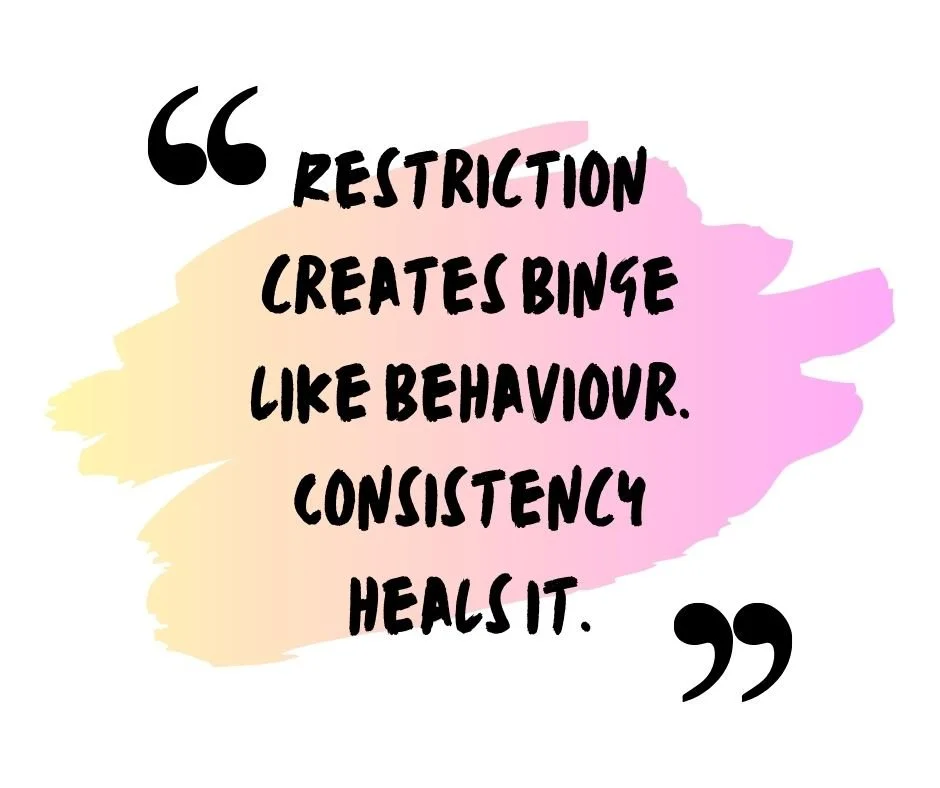
Binge eating disorder is defined by eating in the absence of hunger with emotional distress, secrecy, and loss of control. Whereas, extreme hunger in recovery happens because your body genuinely needs food, you are responding to biological signals, and this hunger will level out when your body eventually feels safe again. Trying to control extreme hunger leads to stronger cravings, increased obsessive food thoughts, more frequent cycles of restriction and overeating, slower metabolic repair, and prolonged recovery. Honouring hunger even when it feels scary is what makes it go away!
So, What can you do to Support Your Body Through Extreme Hunger?
Eat frequently. Aim for three meals and three snacks, minimum.
Prioritise carbohydrates and fats. These are essential for hormonal repair and brain healing.
Remove food rules. Recovery hunger does not respond to control, only permission!
Expect fluctuations. Some days will feel calm whilst others will feel relentless. Both are normal.
Trust the process. Your body will not demand this level of intake forever.
There is no exact timeline as we are all individuals, and that can feel scary, but I promise you that the feeling of extreme hunger will fade when your body feels safe, when it has restored key tissues, and trusts that food is not going to be taken away from it again.
⭐ Every time you honour hunger, you shorten the process!
⭐ This phase is uncomfortable but it is a sign that your recovery is working.
⭐ Your body is not betraying you. It is fighting for your survival.
And, you do not have to do it alone. If you would like professional support from someone who truly understands eating disorder recovery, I am here and I would be honoured to work with you!